
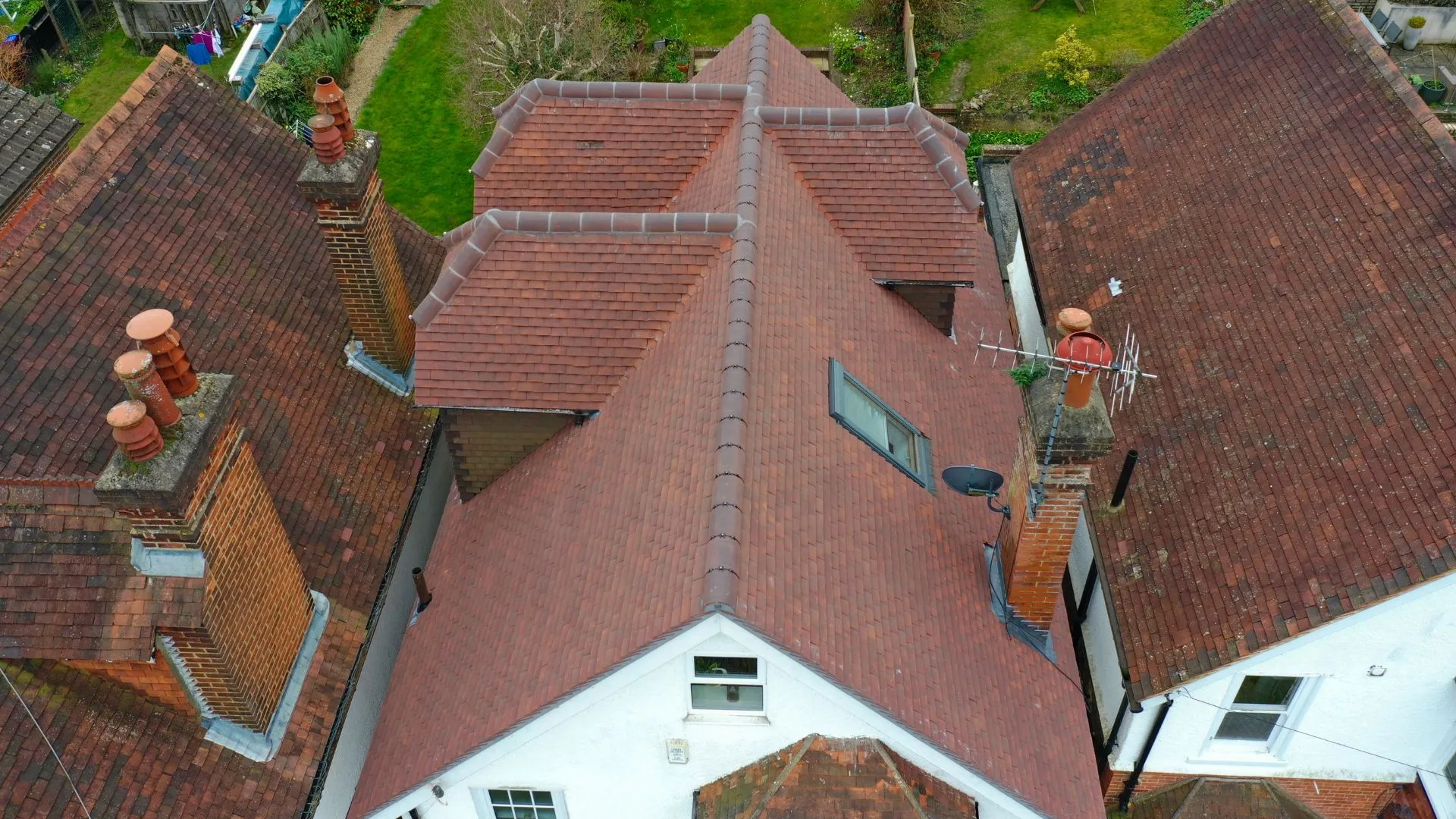


If a surveyor has flagged spray foam insulation on a valuation, or your remortgage has quietly stalled, you are a long way from the first. Foam in a roof has become one of the most common reasons a straightforward mortgage application grinds to a halt, and the homeowner is usually the last to find out there was ever a problem.
Most people we speak to had it fitted in good faith. Someone knocked or rang, and the pitch was a warmer house, lower bills, a slot available next week. Nobody mentioned lenders.
Why Lenders Have Become Cautious
Spray foam is not banned and it is not automatically a defect. What changed is that it is now something a valuer has to deal with rather than walk past.
The Property Care Association is blunt about where this has landed: some mortgage companies have refused to lend on properties with sprayed foam applied to the roof, and valuation surveyors have found themselves unable to assess a roof space properly once foam is in it. RICS puts it more carefully in its consumer guidance, but says the same thing. The presence of spray foam is a factor that can affect a surveyor's opinion of value.
The chain usually runs like this. The valuer puts their head into the loft and cannot see the rafters, the underlay or the back of the tiles. Because they cannot see them, they cannot rule out decay. So they qualify the valuation or ask for a specialist report, and the lender either waits for it or declines.
It is rarely the foam itself that sinks the application. It is the absence of evidence. Nobody can prove the roof is sound, because nobody can see it. That is also why it surfaces at the worst moment: foam fitted in 2019 causes no trouble at all until you come to remortgage, release equity or sell.
Sweating in the Rafters
A traditional British pitched roof is a cold roof. Insulation sits on the loft floor, the space above stays cold, and air moves through it, in at the eaves and out at the ridge. That airflow is not a draught to be sealed up. It is the mechanism that carries moisture out of the roof.
Spray the underside of the slope and you shut that mechanism down. Vapour from showers, cooking and drying washing still rises and still reaches the cold side. It just has nowhere to go. Humidity climbs where the foam meets the timber, and when that surface drops below dew point it condenses. On a clear night the roof radiates heat to the sky and gets colder still, which is when it is worst. That is the sweating people describe.
What the research says
Government-commissioned research into spray foam on timber sloped roofs found that foam applied directly to the underside of the tiles was high risk in every scenario modelled. Open-cell foam against a high-resistance underlay, the old bitumen felt in most houses, with no vapour control layer was also assessed as high risk, in a northern and a southern climate alike.
The same report makes a point that is easy to miss: air gaps as small as a millimetre between foam and timber significantly increase the moisture risk. Foam is applied by hand in an awkward space, around battens, nails and bracing. Perfect contact across a whole roof is a very high bar.
Sustained humidity above roughly 85% against timber is where decay becomes a realistic prospect. The Centre for Sustainable Energy, an independent charity with nothing to sell, points to HSE research finding timber decay in more than a quarter of cases where foam had been applied to the underside of roof tiles.
What you might notice
- A musty or earthy smell in the loft
- Dark staining on rafter ends or wall plates still visible at the eaves
- Damp or mould on upstairs ceilings and in the corners of top-floor rooms
- Rusting nails, corroded truss plates, or staining on the foam itself
- Foam that has shrunk or pulled away from the timber
- Slipped tiles, where the fixings have corroded
The harder truth is that you may notice nothing at all. The foam covers the timbers you would need to inspect, and it covers leaks too. A slipped tile that would once have shown as a damp patch within a fortnight can soak into the structure for years before it reaches your ceiling.
The Other Doors It Closes
- Roof inspections become largely impossible. There is nothing to look at.
- Re-roofing gets dearer. Tiles bonded to foam frequently break on removal, so a few-tile repair becomes a far bigger job.
- Solar panels may be ruled out, because the installer cannot assess or fix to the structure.
- Loft conversions need the structure surveyed first, and that cannot be done through foam.
- Listed buildings need consent, which RICS notes is unlikely to be granted.
- An old roof may not be worth insulating at all. The PCA's view is that where a roof is near the end of its life, around 20 to 25 years, replacing the whole system is often the better spend.
Before You Let Anyone Rip It Out
The removal industry has grown fast and picked up some of the same habits as the installation industry. If someone cold-calls about the foam in your loft and wants a decision today, that urgency is a sales technique. As the Centre for Sustainable Energy puts it, these decisions are never really that urgent.
- Find the paperwork. Who installed it, which product, is there a BBA or Kiwa certificate, were condensation calculations done, is there a guarantee? A certified installation with the right underlay and a vapour control layer is a genuinely different proposition from a cold-call job sprayed onto bare tiles, and sometimes the documents alone settle it.
- Ask your lender or broker what their policy actually is. It varies considerably, and some will proceed on a satisfactory independent report.
- If a report is needed, get it from someone with no stake in the answer. Not the firm that fitted it, and not a firm whose business is removal. The PCA runs a vetted spray foam assessor scheme for exactly this.
- Then decide. Removal, remediation, re-ventilation and a full re-roof are different jobs with very different costs.
We will be straight with you about one thing: Morco do not issue the specialist spray foam assessment report. That is an independent assessor's job, and it should be. The report is only worth something to a lender if the person writing it has nothing to gain from the answer. What we do is everything that comes after it.
Where Our Team Comes In
Once you know what you are dealing with, this becomes a roofing and building job. That is our trade.
- Removal and strip-out, done carefully, so the roof covering survives the process rather than being destroyed by it.
- Timber repairs. Decayed rafters, battens and wall plates replaced; sound timber spliced and strengthened rather than needlessly torn out.
- New underlay, re-battening and re-tiling, salvaging sound tiles wherever we can, which matters on older Surrey properties where matching the originals is half the battle.
- Ventilation reinstated properly, with a clear ventilated void behind the underlay, ventilated at eaves and ridge, to BS 5250, the standard governing moisture control in buildings.
- Insulation done correctly this time. For most houses that means insulating at ceiling level and leaving the roof space cold and ventilated. Where the loft is or will become a room, it means a properly detailed warm roof with the vapour control layer on the warm side, where it belongs.
- Repairing the consequences, from stained ceilings to blown plaster and damaged decoration.
- A full roof replacement where that is honestly the better value, and we will tell you when it is.
- A written scope and full photographic record, before, during and after, so you finish with documentation to hand your surveyor. Given that the whole problem began with a roof nobody could see, that evidence is worth having.
If You Are Still Considering Having It Fitted
RICS's own advice to consumers is worth following to the letter:
- Check with your mortgage provider first whether their policy permits it. Before, not after.
- Take advice from an independent professional with no connection to the installer or manufacturer.
- Make sure the roof is sound and dry, and that ventilation and existing insulation have been assessed, before anything is sprayed.
- Use an installer trained by the manufacturer, working to the manufacturer's method, and ignore unsolicited cold calls.
- Keep everything: contract, condensation calculations, certificates, guarantee, and photographs before, during and after.
- Get listed building consent beforehand if the property is protected.
And treat it as a long-term decision. Spray foam is not readily reversible, and removal is neither cheap nor quick.
Get an Honest Look at Your Roof
If you have foam in your loft and a sale or remortgage in front of you, the worst thing you can do is nothing and hope it goes unmentioned. It will be mentioned.
Contact Morco Construction for an honest assessment of what state the roof is actually in, a clear explanation of your options including leaving it alone, a fixed-price quote for removal, repair, re-roofing or reinsulation, and a documented record of the work for your surveyor and your file.
No pressure, and no appointment that has to be booked today.
Spray foam is a real problem for a great many homeowners, but it is a solvable one. A roof that can be seen, that can breathe, and that has paperwork behind it is a roof a lender has no reason to argue with.